

Surviving Today's Headlines
How I found light in the world's largest cave

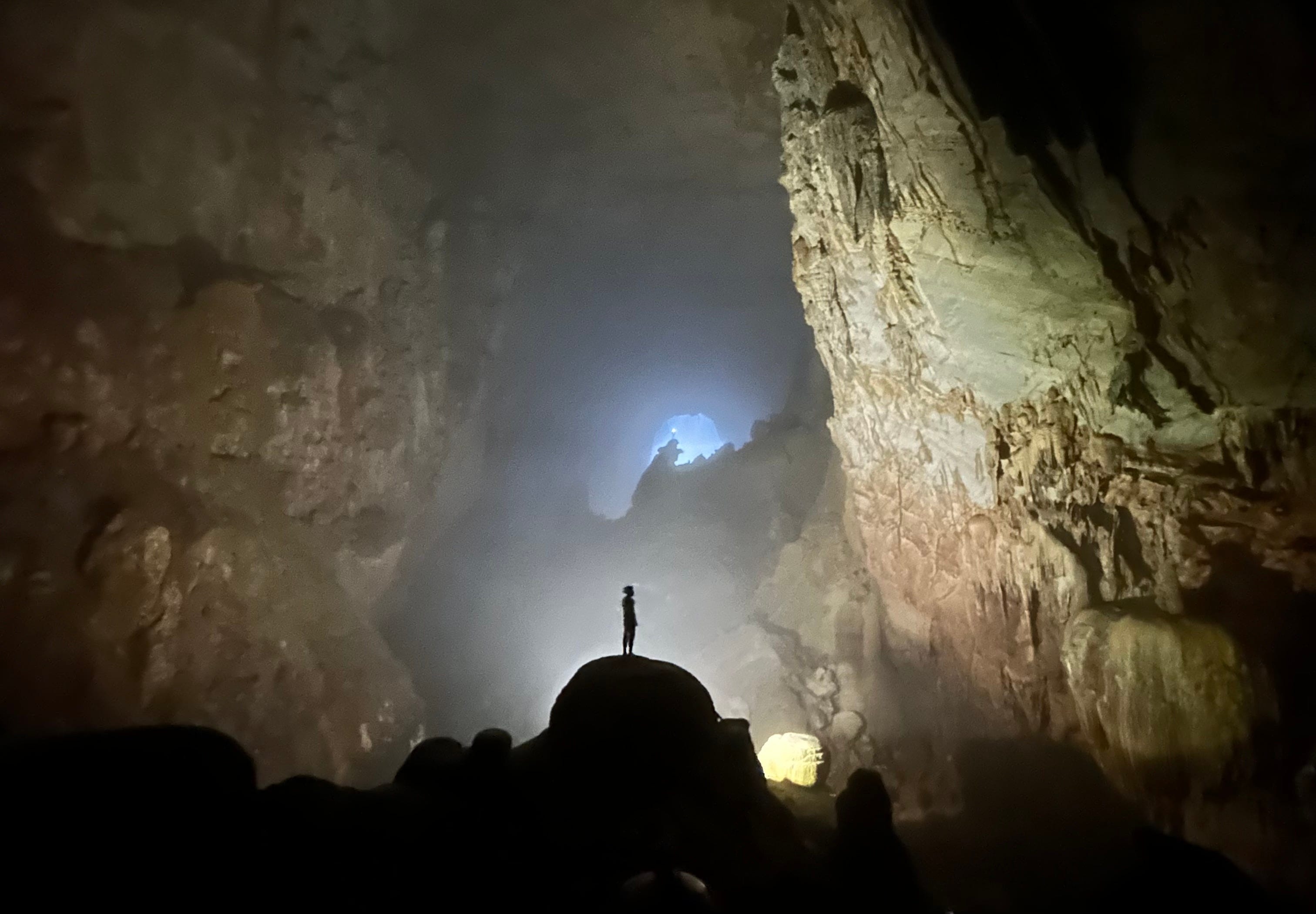
I’ve been searching for perspective lately. It’s hard to watch basic human decency erased from federal policy, to watch people suffer as a result. Aside from rising prices and a tightening job market, I’m faring fine, for now. But I’m experiencing empathy overload and feel powerless reading the news.
I mine my memories for solace. I’m on a mountaintop in New Zealand. I’m ten years old, playing with my best friend in his backyard. I’m trekking Son Doong, the world’s largest cave. I pause there, and settle into the memory.
It’s a year ago and I’m traversing dense Vietnamese jungle. I cross multiple rivers, feet perpetually soaked. I sleep in Hang En cave, smaller than Son Doong, but big enough to hold 5 domed football fields. I spend two nights in Son Doong, which, at almost six miles long, is large enough to hold over 15,000 Olympic-sized swimming pools. It houses 80 meter long stalactites, multiple ecosystems, a primeval rain forest, and underground rivers. Over those few days, I got sick as a dog and left high as a kite.


Just recalling the memory makes me feel better about everything I saw, endured, and accomplished. But the cave is vast. There’s much to explore. I turn on my headlamp to see through the darkness. I listen for the echoes that might help me navigate these troubling times.
We’re cosmically insignificant and intrinsically valuable
The cave is two million years old, made up of 400 million year old limestone. I’m a mere blip in its presence. Playing out my worries and fears on a stage billions of years old and trillions of light years wide instantly diminishes their perceived importance. My current struggles are fleeting.
This feeling of cosmic insignificance is helpful when thinking about my own struggles, but it doesn’t help me feel less powerless about the suffering of others. I think harder. I remember that the same limestone comprises billions of sea creatures compressed into oblivion over millions of years, when the area was a shallow ocean. These creatures didn’t know their lasting impact, but their contributions remain. They are the limestone. And then there are the fossilized creatures who left impressions that persist 300 million years later.


Whether unrecognizable or distinctive, they all left legacies that shape our world. We, too, will leave an imprint, but can’t predict if we will be the anonymous creature creating the limestone, or the one that leaves an indelible impression. It doesn’t matter, so long as positive intentions guide us. By releasing our attachment to the outcome, because we just don’t know, we relieve the pressure. We are free to do what we think is right. We are free to do our best.
No one survives alone
Under the best of circumstances, I couldn’t trek through this cave on my own. The existential threats are extreme—climbing and repelling cliff sides, few natural sources of food, and lots and lots of darkness.
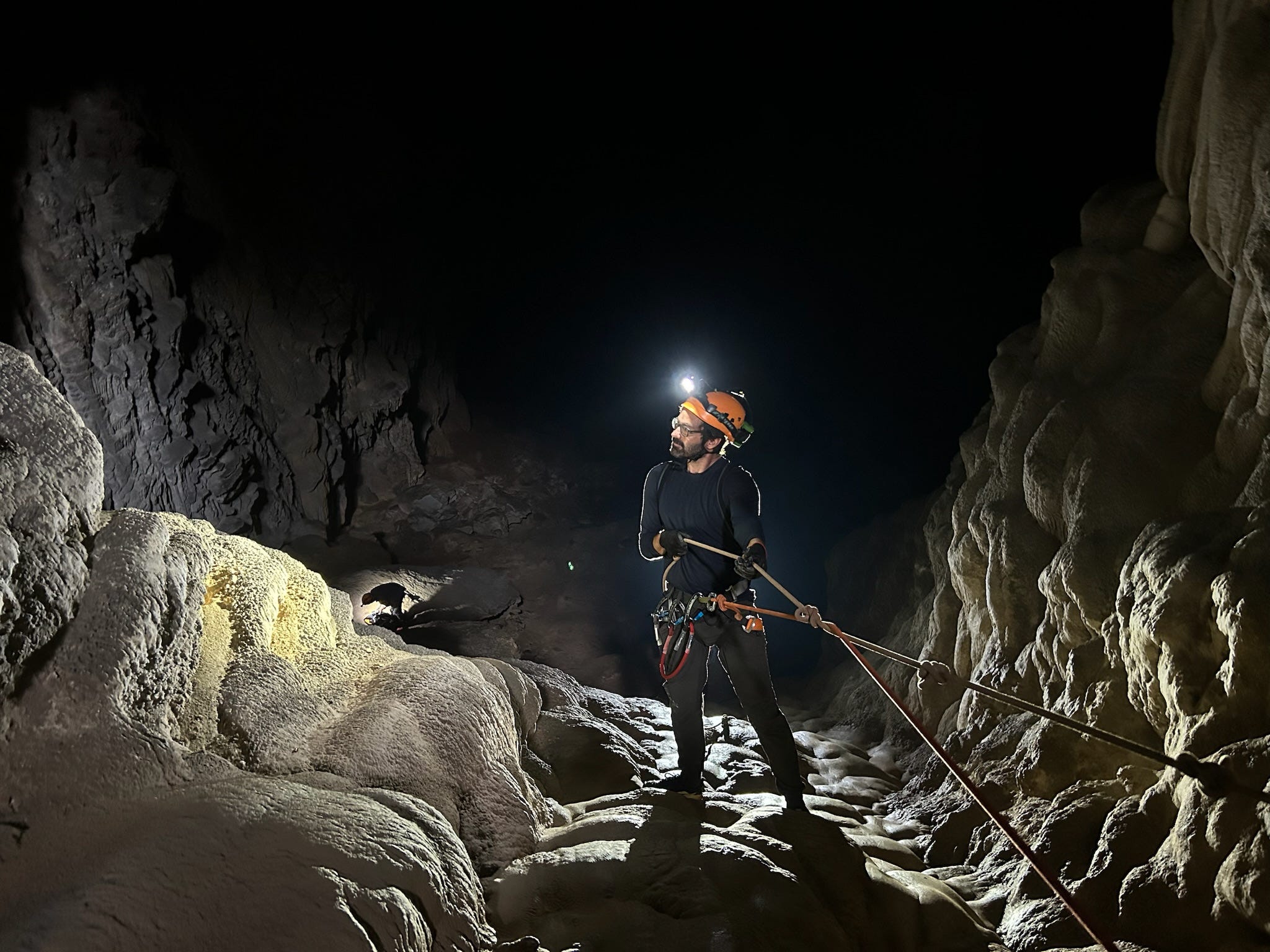
Thankfully, Oxalis, the tour company, supported us with solid infrastructure. Food, lodging, education, and medical care, all thoughtfully provided. We were a team of ten other guests, a safety expert, a tour guide, multiple safety assistants, porters, and cooks. With this cave community supporting each other, we survived, and even thrived.
While we can’t expect a team of experts to have our backs in the real world, although some can afford such luxuries, most of us won’t succeed without the basics. Currently, in the U.S., those basics are under attack. We're slashing food safety rules and aid for the needy. Prices are rising. Education is being dismantled. Medicare, Medicaid, and prescription drug price controls are all under threat. We can’t take these necessities for granted, as if they’ll always be here. We must defend them.
It’s kind of ridiculous that I’m boycotting Whole Foods to send a message of disapproval to the billionaire sycophants. How can I more effectively help between elections?
Time spent with my cave community reminds me to focus on those immediately around me, my San Francisco neighbors. Who is locally vulnerable and in the government’s crosshairs? It’s them I should support. For them, I can make more of a difference.
History comforts more than it cowers
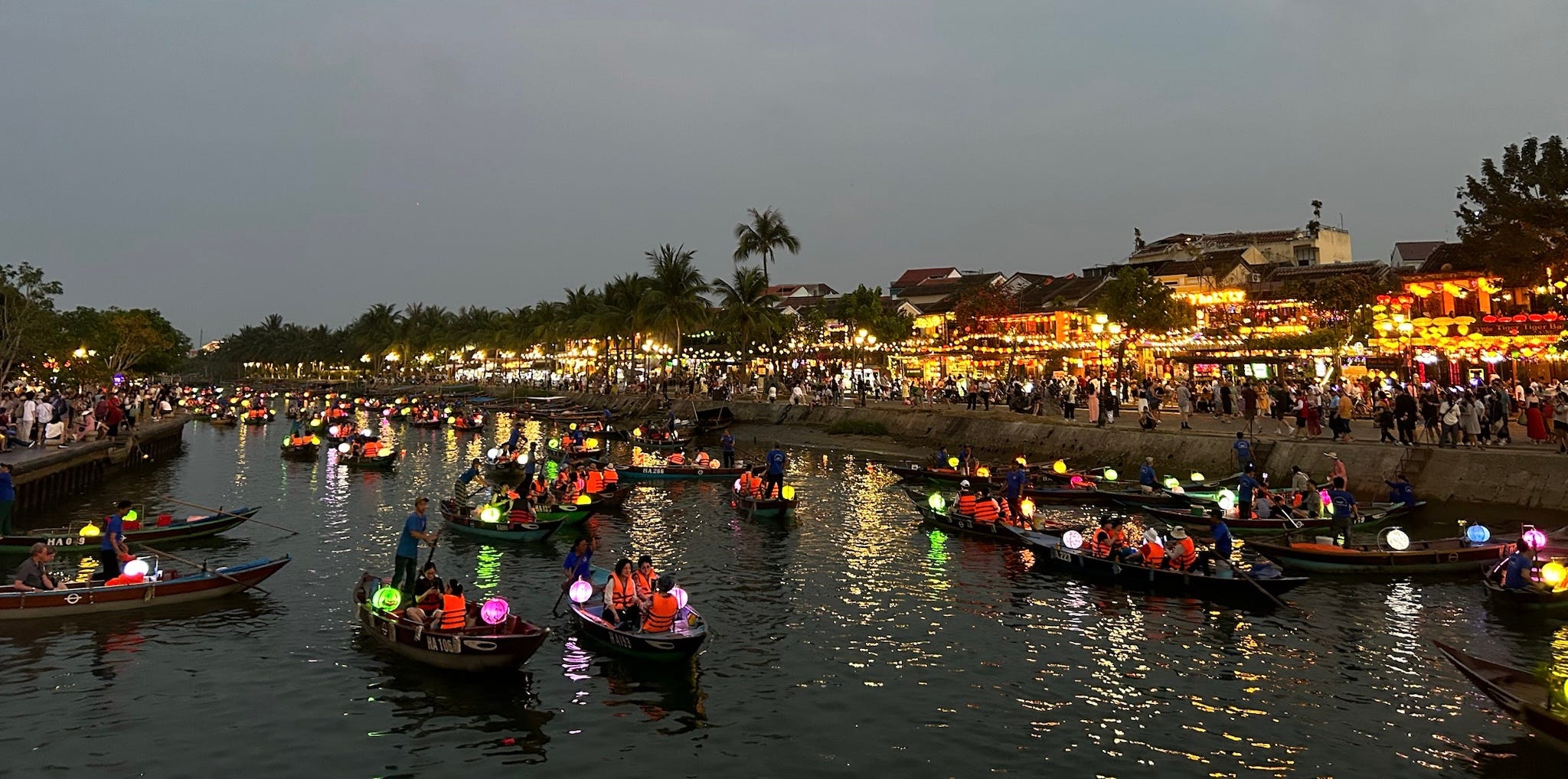
Beyond the cave, my time spent in Vietnam showed me how humans can be resilient under horrific conditions. Walking through the vibrant streets of Hanoi and Ho Chi Minh City, under a thousand lanterns in Hoi An, it’s hard to imagine the country was in ruins.
This week marks the fiftieth anniversary of the Vietnam War’s end, a conflict that inflicted suffering unfathomable to most Americans today. Over three million Vietnamese died. American forces dropped more bombs on Vietnam than were used in all of World War II combined. Agent Orange and other defoliants poisoned nearly five million acres of forest and farmland, still damaging the health of Vietnamese today. The country was literally torn in two, families separated, infrastructure decimated, an entire nation traumatized.
Standing in Vietnam last year—watching families gather in parks, markets bustling with commerce, new buildings rising alongside carefully preserved historical sites—I found myself transfixed by the resilience on display. This wasn't just recovery; it was transformation. After the war, a spirit of national unity combined with support from the global community, including vital organizations like USAID, helped the country heal. The government gradually shifted from isolation toward international engagement, opening borders to foreign investment and visitors.
As the United States faces serious self-imposed challenges, I’m comforted by the belief that whatever happens, sans a mass extinction event, we will come out the other end with the opportunity to rebuild what’s currently being destroyed. The question is how much destruction will be wrought in the meantime. I don’t expect its scale to be as massive as what the Vietnamese endured, but as a result of policy changes people are dying and lives are being destroyed. We need to be aware of it, so we can ultimately fix it, because if history is our guide, we’ll eventually have that chance.
Emerging from the Cave: Where do we go from here?
My headlamp illuminated just a fraction of Son Doong's vastness, just as my actions may touch only a small corner of our troubled world. But I'm learning that has to be enough. By revisiting Son Doong, I got a little more perspective, inspiration to focus locally, and spent a few hours in a happier place.
My Substack community has also been a huge help. I read Heather Cox Richardson for daily updates and historical context, Qasim Rashid for activist inspiration, and Tina Brown to help me get through this Fresh Hell while shaking my head and smiling at the same time. Who are your go tos? I’d love to discover more fresh voices to keep me moving forward.
I am so frustrated as I feel like there is nothing I can do to stop the carnage of the Constitution and therefore, our country. Protesting is all I know at this point and working with the democratic party. Hugs
Nice to have you back to writing and sharing your thoughts. You share some thought provoking ideas and questions. How can I help to make a difference? We can only hope that we will come out on the better side of our differences.